Female friendship written like this is a hundred times scarier than romance. The moment Violet appeared, I was dangerously fascinated.
MY STUDY PRESENTS
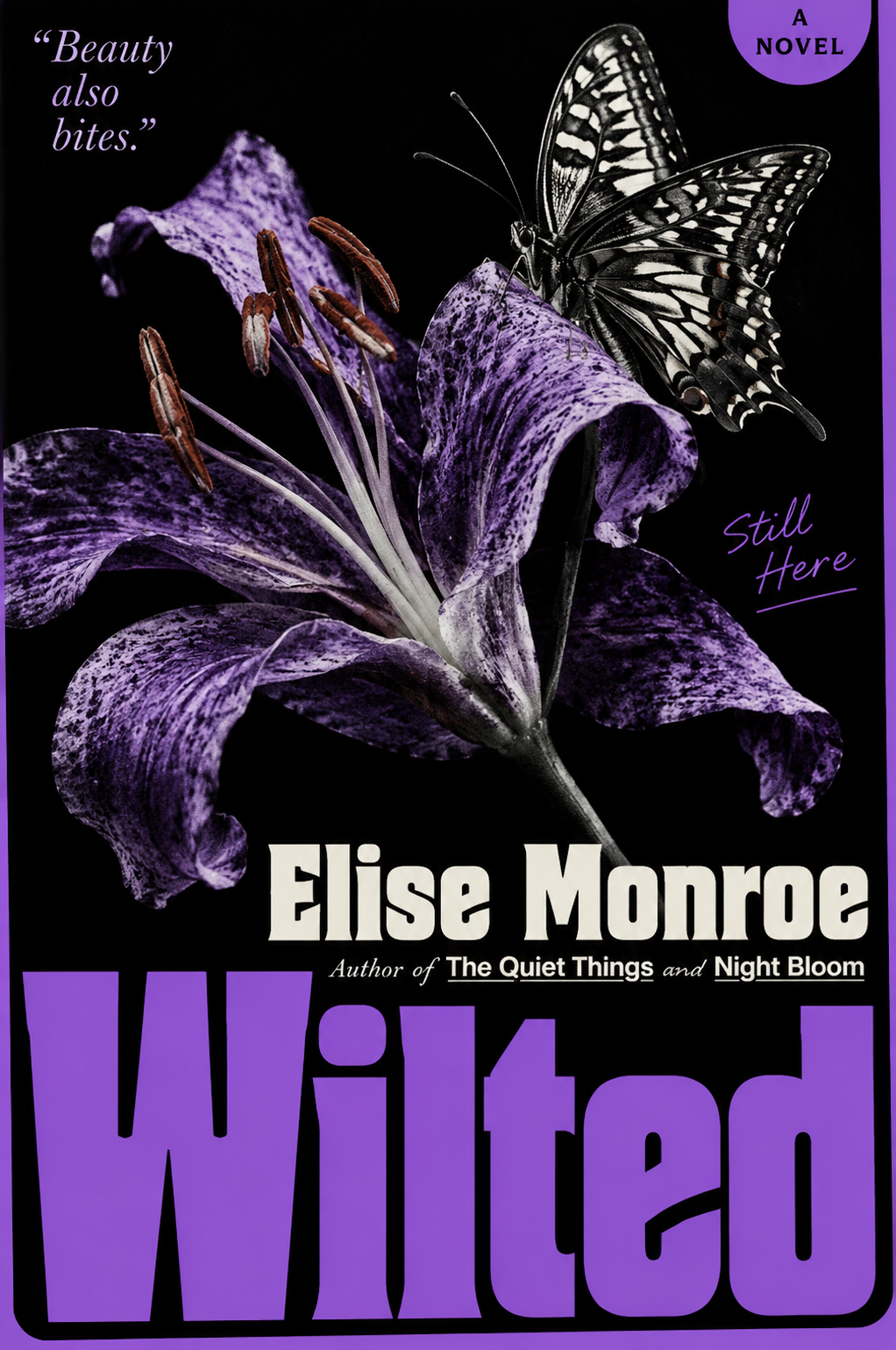
Wilted
MOODYSTRANGESLOW BURN
DEMO READER / WILTEDREAD NOW →
01 / THE VIBE
🐍 DESIRE🍎 FORBIDDEN🩸 MYSTERY🖤 OBSESSION
Elise Monroe is a Canadian literary novelist known for prose that is cool, lush, and just a little uncanny. She studied entomology before turning to fiction, so pressed plants, insects, preserved bodies, and the urge to collect often surface in her work. Monroe is almost obsessively interested in preservation: why do we want love, youth, and beauty to remain frozen at their loveliest—and what kind of violence can that wish create? One of her most acclaimed novels, Wilted follows a friendship between two women across twenty years as admiration slowly turns into possession.
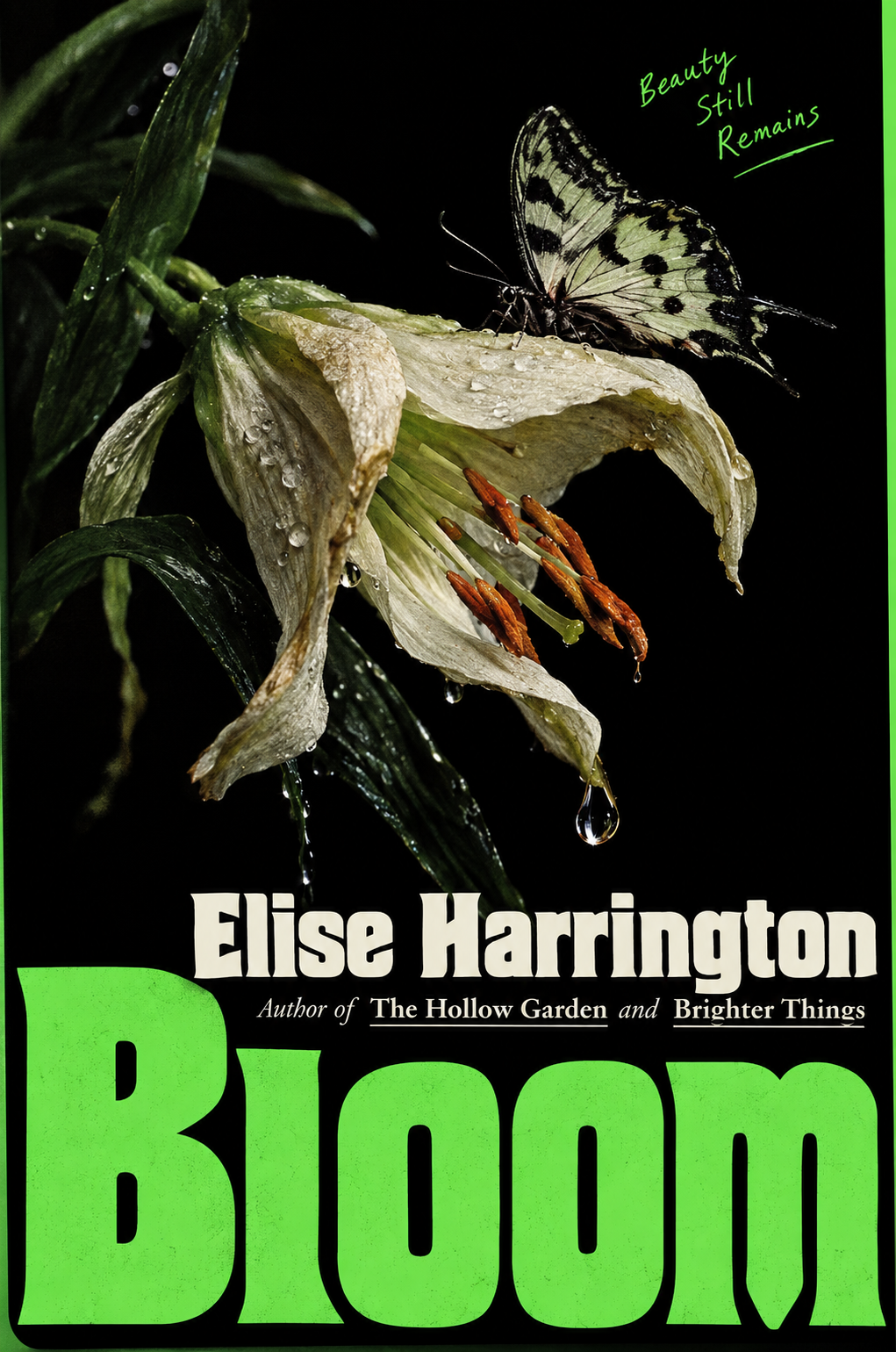
Ada is seventeen when she first meets Violet, who is pinning a butterfly into a display case. The needle passes through its body, but Violet says softly, “Don’t worry. Now it will stay beautiful forever.” They quickly become inseparable. Violet is beautiful, bold, impossible to refuse; Ada is quiet and always a step behind her. They skip class, steal wine, sleep in the same bed, and promise that at thirty they will open a flower shop by the sea. Then, at nineteen, Violet vanishes. No body. No goodbye. Just a bedroom crowded with dead flowers and pinned insects. Eighteen years later, Ada restores specimens at a museum. One day, a package arrives with no return address. Inside is a purple butterfly. And a note: YOU LET ME WILT.
After that, a new package arrives every month. Butterflies, lilies, old photographs, and objects only Ada and Violet would recognize. Ada begins investigating the old disappearance again, only to discover that her memories of that summer cannot be trusted. She has always told the police she last saw Violet on June nineteenth. But a newly surfaced roll of film proves otherwise: on June twentieth, they were still together. As the past slowly regains its color, Ada must face the question she has avoided for eighteen years—did she truly forget that night, or did she choose to? Some relationships leave scars when they end. Others never end. They are pressed between pages, fading slowly, waiting for the day someone opens the book again.
you've been warned ↘
Don’t just take
our word for it
‘Now it will stay beautiful forever’ sent a chill through me that lasted until the final page.
It isn’t asking where Violet went. It’s asking: what exactly did Ada do to her?
GET A TASTE!
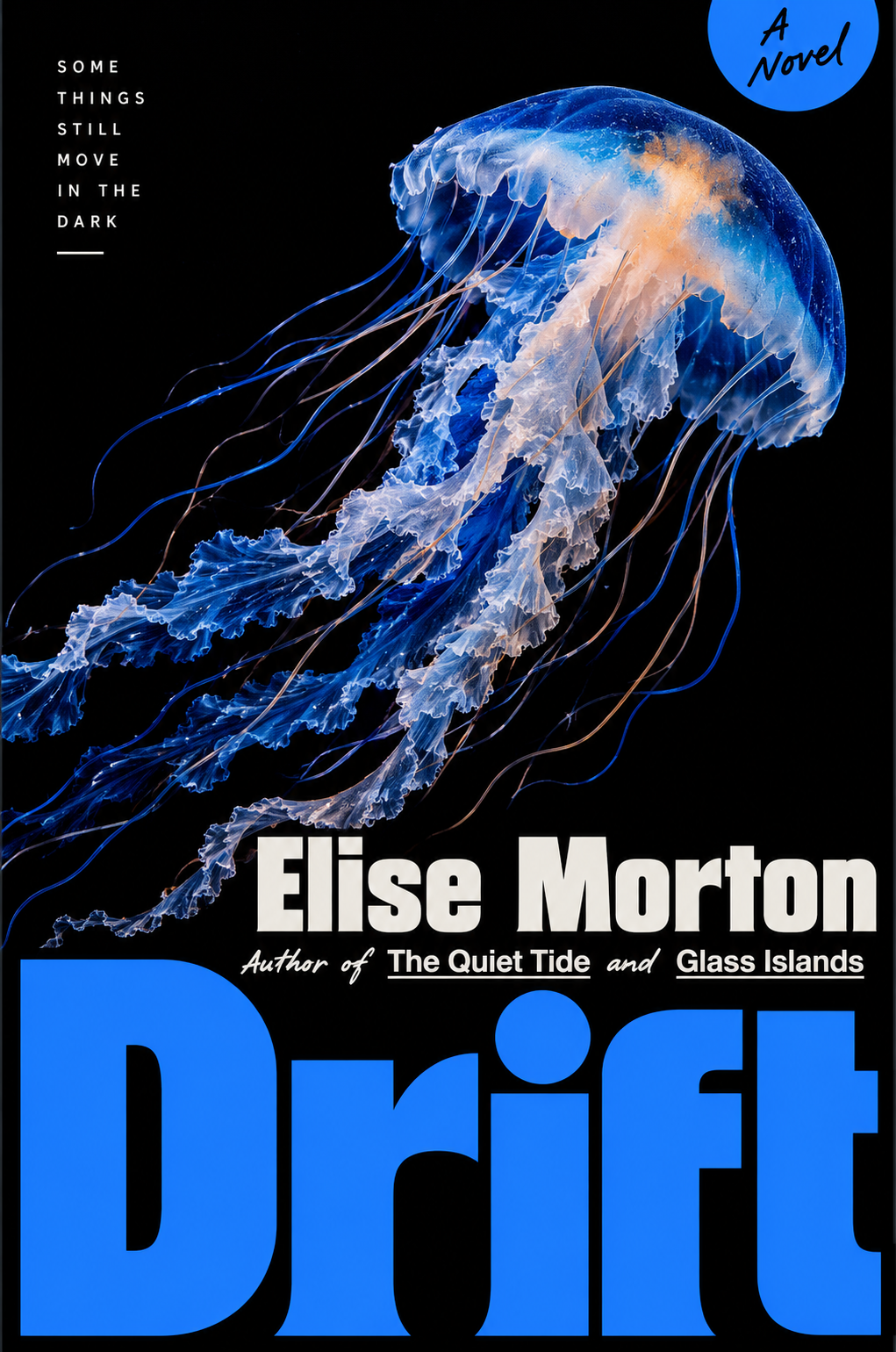
The first time Mara heard her brother’s voice, she thought she had fallen asleep. It was 2:43 a.m. The only sounds left in the lab were the low hum of the servers and the coffee machine’s occasional metallic click. She had spent six hours listening to underwater recordings: humpback calls, propellers, the tremor of a distant earthquake, and countless ocean noises no one had managed to classify. Hydrophone S17 sat 3,800 meters deep and 406 kilometers from the nearest land. Twelve seconds of static came through her headphones. Then every sound vanished. It was not silence, but an unnatural blank, as though the entire ocean had held its breath at once. Then someone said, “Mara.” She pulled off the headphones. The lab was empty. Her face stared back from the glass, pale and exhausted, her hair pinned up with a pencil. She put the headphones on again and rewound fifteen seconds. Static. Blankness. “Mara.” This time she heard it clearly. A man’s voice, seemingly far from the microphone, yet untouched by the distortion of an underwater recording. She slowed the track to seventy-five percent, returned it to normal speed, then enlarged the waveform. By the third replay, her hands were shaking. Because the man had not only said her name. After the faintest breath, he had added, “Don’t let them bring the ship back.” Finn had been missing for three years and four months. The last time Mara heard his voice was eighteen days after the search ended. It was not a phone call, but a message he had left before sailing: “Hey, I forgot your blue mug. Don’t kill me.” She had never deleted it. The police said the boat might have met a sudden storm. The coast guard said the current could carry a person beyond the search zone in hours. Her father said that one day she would have to accept that no body was still an answer. Mara accepted many things: a funeral without a coffin, her mother locking Finn’s room, birthday cakes shrinking from six servings to four. The one word she never accepted was dead. She opened her private drive, dragged the three-year-old voicemail into the analysis software, and layered it over the S17 recording. Two voiceprints slowly appeared on screen. She stopped breathing. Ninety-one percent similarity. Of course the machine could be wrong. The sea could produce frequencies that resembled a human voice. She knew every reasonable explanation and could have written a full report proving grief had turned her brain into a pattern-finding machine. Then S17’s live signal moved again.
CONTENT NOTES
01WHY WE PICKED THIS BOOKIf you believe female friendship can be more intimate, more jealous, and more dangerous than romance, Wilted will probably be exactly your thing.
02A QUICK HEADS-UP🦋 The timeline moves between the present and nineteen years earlier; themes include disappearance, control, unreliable memory, and unhealthy attachment.
03WHO IT'S FORFor readers drawn to dark female relationships, obsession, butterfly specimens, old secrets, and beautifully gloomy aesthetics.
SIMILAR BOOKS