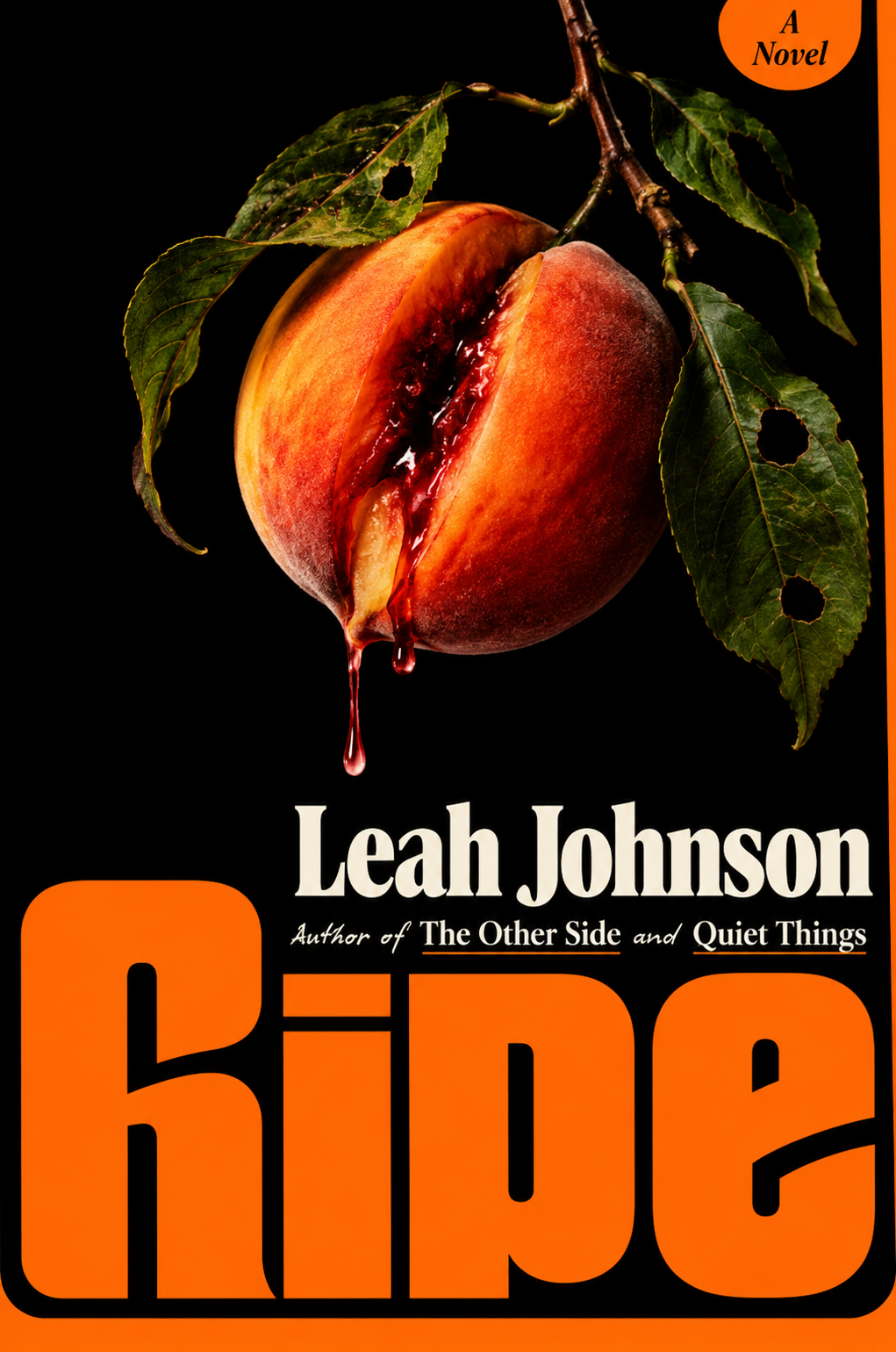
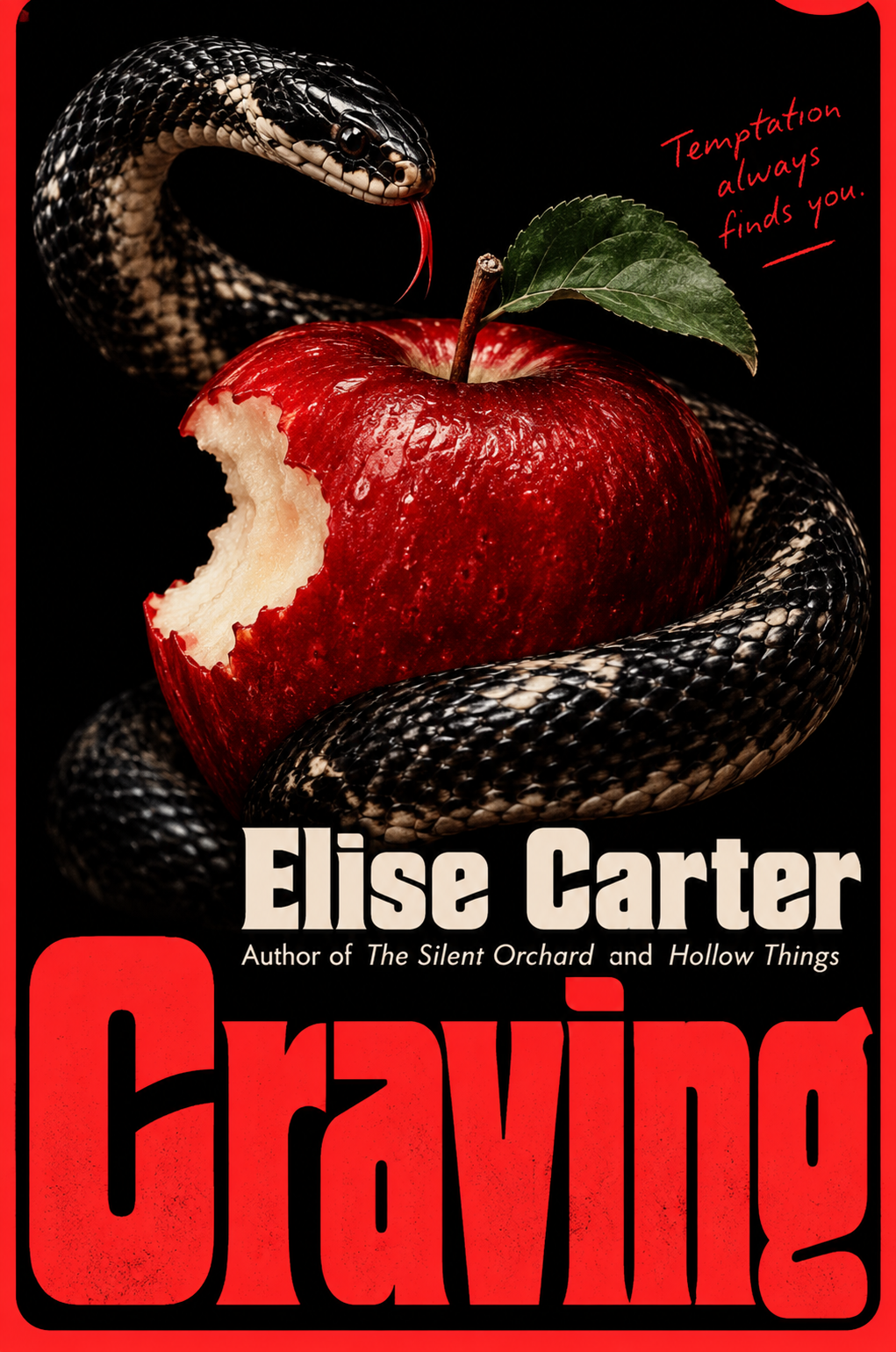
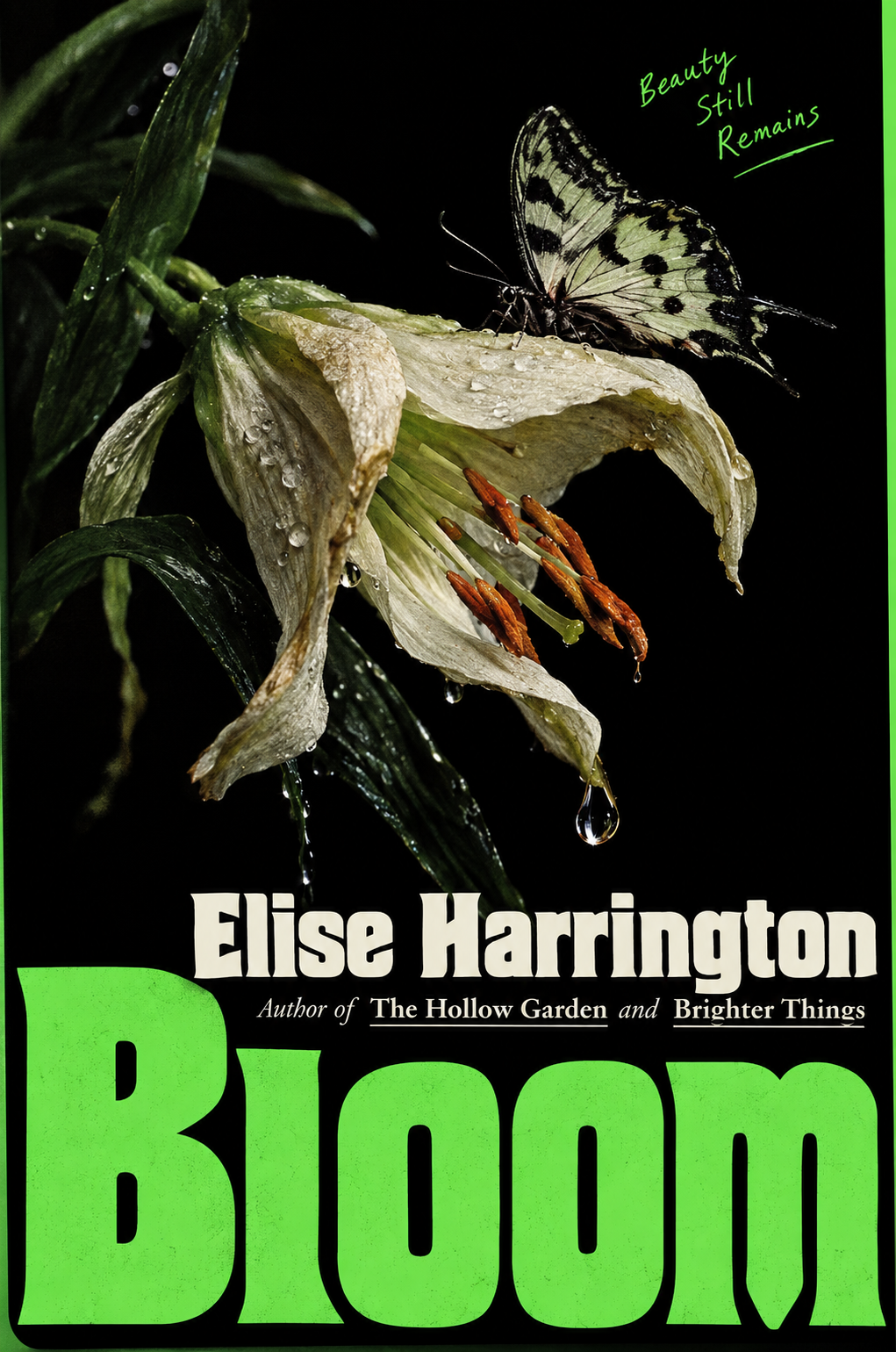
When the twelfth notebook had Sofia’s name on it, I shut the book for five full minutes.
MY STUDY PRESENTS
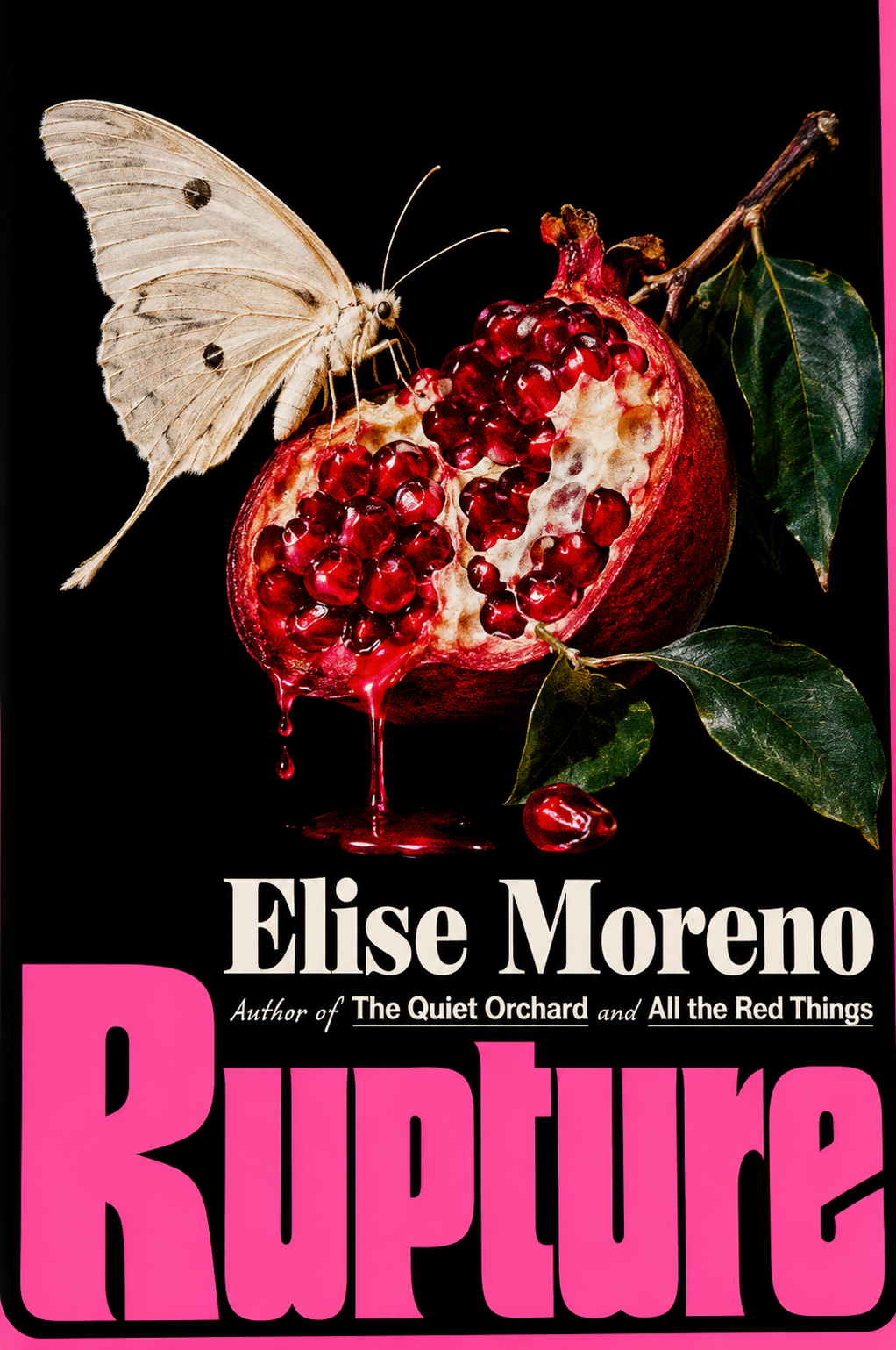
Rupture
MOODYSTRANGEFAMILY
DEMO READER / RUPTUREREAD NOW →
01 / THE VIBE
🐍 FAMILY🍎 FORBIDDEN🩸 FRACTURE🖤 SECRETS
Elise Moreno is a Mexican American novelist whose work centers on mothers and daughters, bodily memory, and the silence passed down through immigrant families. Born in Arizona, she studied sociology and spent years working as a journalist. Her novels often begin with the smallest secret inside a family and slowly uncover a lie maintained across generations. She is especially skilled at weaving physical images—food, fruit, wounds—into family narratives. In Rupture, a split pomegranate symbolizes both birth and the moment a family can no longer hold its perfect exterior together.
Seven days after her mother dies, Sofia Moreno receives a pomegranate. There is no sender. The fruit has been cut neatly open, with twelve seeds missing. At the bottom of the package is a single line: ASK HER ABOUT THE TWELFTH GIRL. But her mother is dead. Sofia returns to her Arizona hometown to sort through what Elena left behind. Her mother had been one of the area’s most respected midwives, delivering hundreds of babies across forty years. People in town said she had “hands that brought life into the world.” Then Sofia finds twelve red notebooks in her mother’s bedroom. Each belongs to a girl. Sofia recognizes none of the first eleven names. The twelfth notebook carries her own. More unsettling still, the official record from the year of her birth shows that Elena did not deliver one baby that night, but twins. There is no death certificate for the other child. Sofia begins searching for the women in the notebooks and learns that each experienced an unexplained disappearance, adoption, or identity change while young. Every trail leads back to the same private clinic, now closed.
Sofia believes she is investigating a crime committed by her mother. Then, in the final pages of the twelfth notebook, she discovers Elena may not have been the one who took the children. She was secretly returning them. And Sofia was the last girl who was never returned. Rupture is not about how a family breaks apart. It asks something more brutal: if the “family” holding your whole life together was stitched from a lie, would you still call it home?
you've been warned ↘
Don’t just take
our word for it
The mother-daughter relationship is so complicated. There are no easy villains and no cheap forgiveness.
The pomegranate is the perfect image: one complete shell holding dozens of lives, connected and separate at once.
GET A TASTE!
Elena Moreno could not stand stains, especially red ones. When Sofia spilled ketchup as a child, she frowned. When Sofia’s first period stained the sheets, Elena said nothing; she soaked them in cold water and scrubbed until her knuckles went white. Sofia split the pomegranate open. The seeds inside were plump as rows of tiny teeth. She thought of the note in the package: ASK HER ABOUT THE TWELFTH GIRL. She almost laughed. Ask her. How convenient. Whoever sent it clearly did not know Elena had been buried seven days earlier in Saint Mary’s Cemetery, wearing the gray dress she hated, a rosary in her hands that Sofia had never once seen her use. The thing dead people did best was suddenly acquire endless secrets. She counted the seeds only to prove how ridiculous the whole thing was. At three hundred and seven, she stopped. Twelve perfect gaps opened in the center of the flesh, as if someone had removed exactly twelve seeds with tweezers. Sofia stood and went into her mother’s bedroom. The room still held Elena’s smell: lavender powder, old wood, and mint ointment. At the bottom of the wardrobe was a drawer Sofia had been forbidden to open as a child. The key was gone, but the lock was old. Two attempts with a kitchen knife broke it open. Twelve red notebooks stood neatly inside, each spine marked only with a year. Sofia began with the oldest. A newborn footprint was pasted onto the first page. Beneath it: Lucía, 1981. The second notebook: Maribel, 1984. The third, the fourth, the fifth… Each girl was followed by a birth date, weight, mother’s name, and the same repeated line: returned safely. The twelfth notebook came from the year Sofia was born. She did not open it at once. Outside, the wind moved through the pomegranate tree, its branches scratching the window like fingernails. Finally Sofia lifted the cover. There was no footprint on the first page, only a hospital wristband. Her mother’s name was printed on it—not as the attending midwife, but as the patient: ELENA MORENO / FEMALE INFANTS: 2. Sofia read it again. Infants. Plural. Beneath it was her mother’s handwriting, messier than in any of the other notebooks: One returned. One remained with me. Something fell in the kitchen. When Sofia went back, the pomegranate had rolled from the table to the middle of the floor, scattering red seeds everywhere. She looked down at them and, for the first time, did not clean them up.
CONTENT NOTES
01WHY WE PICKED THIS BOOKRupture begins with a pomegranate missing twelve seeds and tears open a mother’s secret piece by piece, until the word family itself becomes suspect.
02A QUICK HEADS-UP🩸 Includes death, childbirth, hidden identities, mother-daughter trauma, and family ethics; some scenes may carry considerable emotional weight.
03WHO IT'S FORFor readers who love family mysteries, mother-daughter relationships, women-centered stories, identity twists, and secrets passed between generations.
SIMILAR BOOKS